Certain things in life merit hyperalertness. Driving on a rainy highway, for instance. Spotting a bear in the distance as you unpack your picnic. Operating power tools. However, one of those things doesn’t involve constantly fixating on your credit score. Odds are, your score isn’t going to dramatically change after one browser refresh.
You care about your credit score. You’re working hard to build or improve it. But there’s a more efficient way to keep track of your progress than watching your score like a hawk and panicking every time you see a slight dip. Being aware of some important credit score milestones will give you a clear sense of how you’re progressing and where you might still need to improve.
Think of these milestones as the landmarks of your credit journey.
Think of these milestones as the landmarks of your credit journey.
Sponsored by  Finding the right personal loan matters. ReportSmart connects you with experts who assess your needs and match you with smart, personalized loan options.
You Hit Key Numbers in Your FICO® Score
One of the most commonly used credit scores is your FICO® Score, despite the presence of different competitors. Your FICO® Score is a three-digit number that most top lenders use to assess your creditworthiness. It’s based on factors like payment history, credit utilization and length of credit history. Understanding what these numbers mean is important while building your credit.
If you’re starting with a lower FICO® Score, that’s okay. Sometimes, the most successful journeys have humble beginnings. Think of it this way: Your course is already mapped for you — and that involves moving up.
Here are some key numbers that signal significant changes in your credit score.
580: A Common Starting Point for “Fair” Credit
A FICO® Score of 580 is generally considered the beginning of the “fair” credit range. This doesn’t mean you’re guaranteed to get approval for a loan or credit card. Potential lenders consider other factors, too, including your income, debt and payment history.
Still, if you’ve struggled with poor credit in the past, moving into the fair range is an achievement you should feel proud of.
670: The Start of “Good” Credit
Congratulations! When your credit score reaches 670, you’ve entered the “good” credit range. Pat yourself on the back. While reaching 670 doesn’t mean you’re automatically going to get the best rates or offers, you’re in a much stronger position than you would be with a score in the poor or fair ranges.
Sponsored by Finding the right personal loan matters. ReportSmart connects you with experts who assess your needs and match you with smart, personalized loan options.
700+: A Stronger Position With Lenders
Once your score reaches 700, you’re firmly in good credit territory. That’s truly an accomplishment that’s taken a lot of hard work and good habits.
This is also a point where obsessing over every small change might not be especially productive. Instead of sweating the difference between 705 and 710, focus on maintaining healthy credit habits.
740+: Where Small Differences May Matter Less
If your credit score reaches the mid-700s or beyond, your credit is generally considered very good, which means you’re more likely to find success when you apply for loans, mortgages or credit cards.
Your mission, should you choose to accept it (and you definitely should)? Keep up the good work. Make your payments on time, pay your balance in full when you can, and don’t charge more than you can truly afford.
Sponsored by Finding the right personal loan matters. ReportSmart connects you with experts who assess your needs and match you with smart, personalized loan options.
You Check Your Credit Report for the First Time
Your credit score is kind of like your car’s dashboard: It can give you an overview of what’s working smoothly with your credit and some very clear signs of what’s not. But to understand what that check engine light or credit score that’s lower than you’d like really means, you have to pop the hood. Or, in the case of your credit score, read your credit report.
There’s a difference between knowing your credit score and understanding your credit history and behavior. If your score is a number, your credit report contains the information behind it, including your accounts, payment history, balances and credit inquiries.
There’s a difference between knowing your credit score and understanding your credit history and behavior.
Checking your report for the first time gives you a chance to see what lenders and creditors might see when they look under the hood of your credit history. It also gives you a sense of which behaviors need to change if you want to improve your credit.
You’ve been meaning to set up automatic payments for a while, and maybe you just haven’t gotten to it. However, seeing that you’ve missed enough due dates to damage your credit score can finally spur you into action.
Sitting down with your credit report might make you aware that high balances have become too difficult to manage. So, you might focus on paying down existing debt and avoiding additional charges while you work on it.
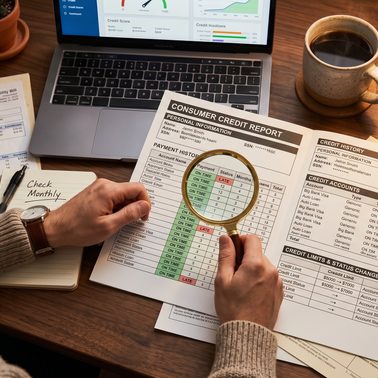
Reviewing your credit report for the first time can be an integral part of your broader plans to improve your personal finances. Ideally, you’ll sit down with your credit report once a month. You can even make a little self-care date or ritual out of it.
You Understand How Your Billing Cycle Works
You already know that your credit card isn’t a passport to free money. Everything you charge, you have to pay back. You get that. But understanding the less surface-level aspects of how to use your credit card can help you avoid expensive surprises.
For instance, understanding your billing cycle and grace period can help you avoid paying unnecessary interest. During your billing cycle, your credit card company tracks your purchases and other activities. At the end of the cycle, it calculates your statement balance and sends you a bill.
Sponsored by Finding the right personal loan matters. ReportSmart connects you with experts who assess your needs and match you with smart, personalized loan options.
Here’s the thing some people don’t know: Many credit cards offer a grace period between the end of the billing cycle and the payment due date. The length of that period varies by card, so check your cardholder agreement for the details.
When a grace period applies and you pay your full statement balance by the due date, you generally won’t pay interest on those purchases.
You may think you’re saving more money in the short term by only making the minimum payment. However, carrying a balance from month to month can result in interest charges, making your purchases more expensive.
How does this impact your credit score? Payment history is the biggest factor in your FICO® Score, accounting for about 35% of the score. And keeping your credit card balances low relative to your credit limits can help you maintain a healthy credit profile.
Give Yourself Some Credit
Building or improving your credit represents major growth in your personal finances. And there are better ways to do it than constantly checking your credit score every time you open your phone.
Instead, pull up your credit report and look for one thing you can act on. You know what they say about the journey of a thousand miles, right? It starts with one clear step. Setting up automatic payments or making a concrete plan to pay down high balances will take you farther along that worrying can.
Remember, the most important credit milestone isn’t hitting a perfect number overnight. It’s becoming someone who knows what’s on their credit report and how to work with that information.
The most important credit milestone isn’t hitting a perfect number overnight. It’s becoming someone who knows what’s on their credit report and how to work with that information.
Sponsored by Finding the right personal loan matters. ReportSmart connects you with experts who assess your needs and match you with smart, personalized loan options.